Springer’s Space and Society book series

The series was founded by Springer together with Founding Editor Douglas A. Vakoch.

Editor-in-Chief: Klara Anna Capova
Series Editors: Anthony Milligan, David Dunér, Erik Persson, Erny Gillen, and Stella Alexandrova Tkatchova

The Space and Society series explores a broad range of topics in astronomy and the space sciences from the perspectives of the social sciences, humanities, and the arts. As humankind gains an increasingly sophisticated understanding of the structure and evolution of the universe, critical issues arise about the societal implications of this new knowledge. Similarly, as we conduct ever more ambitious missions into space, questions arise about the meaning and significance of our exploration of the solar system and beyond. These and related issues are addressed in books published in this series.

Our authors and contributors include scholars from disciplines including but not limited to anthropology, architecture, art, environmental studies, ethics, history, law, literature, philosophy, psychology, religious studies, and sociology. To foster a constructive dialogue between these researchers and the scientists and engineers who seek to understand and explore humankind‘s cosmic context, the Space and Society series publishes work that is relevant to those engaged in astronomy and the space sciences, while also being of interest to scholars from the author‘s primary discipline. For example, a book on the anthropology of space exploration in this series benefits individuals and organisations responsible for space missions, while also providing insights of interest to anthropologists. The monographs and edited volumes in the series are academic works that target interdisciplinary professional or scholarly audiences. Space enthusiasts with basic background knowledge will also find works accessible to them.

Find out more about current book titles in this series.
SETI Post-Detection Hub Launched

The SETI Post-Detection Hub, an initiative of the UK SETI Research Network (UKSRN) jointly hosted by the St Andrews Centre for Exoplanet Science and the Centre for Global Law and Governance, has been launched in September 2022. I am happy to contribute to the hub as an international affiliate.

What does humanity do when we discover we are not alone in the Cosmos?

Science fiction is awash with explorations of the impact on human society following discovery of, and even encounters with, life or intelligence elsewhere. But we need to go beyond thinking about the impact on humanity. We need to coordinate our expert knowledge not only for assessing the evidence but also for considering the human social response, as our understanding progresses and what we know and what we don’t know is communicated. We have contemplated life on other Worlds for countless generations; the search for extra–terrestrial intelligence and their technology has now been an ongoing endeavour for decades. Our own technical resources have since improved significantly, and with those the chances of detection are therefore continually increasing.

Social interest has risen considerably recently, due to the detection of thousands of planets around distant stars in our own galaxy and, closer to home, through the exploration of nearby worlds such as Mars and Venus, looking for signs of life, present or past. The potential discovery of microbial life will likely raise different types of concern that would follow the discovery of intelligent life – we are as yet entirely unprepared as a species for the latter. The time is thus right for consideration of humanity’s response – and responsibility – following the detection of both life and intelligence in the Cosmos. We should plan now for this eventuality by setting out impact assessments, protocols, procedures and treaties designed to allow humanity to respond responsibly.

With the SETI Post-Detection Hub, we would like to draw interested members of the global SETI community together to work on topics ranging from message decipherment and data analytics to development of regulatory protocols, space law and societal impact strategies. Moreover, we aim at fostering a community with diverse expertise across both the sciences and the humanities connecting research with policy development.

Space for Earth: Health, food, and climate

ESA astronaut Thomas Pesquet shows how space technologies and research onboard the International Space Station are used for the benefit of people on Earth. Thomas explains how space research is relevant to three of the United Nation’s goals: Health (SDG3), Zero hunger and food security (SDG2), and Climate action (SDG13).

The Sustainable Development Goals are the world’s to-do list for people and the planet by 2030. Learn more about the European space laboratory, the Columbus module, and four examples of how space exploration supports sustainable development in Europe and in Africa. This video is Part 2 of a 2-part series that describes how space exploration supports the sustainable development on Earth today.


Read more about benefits of European space exploration: http://youbenefit.spaceflight.esa.int

Space for Earth: Water and sanitation

Join ESA astronaut Thomas Pesquet as he explains the benefits of space exploration technologies and activities for Earth. This video is focused on the life support technologies originally developed for astronauts and shows how space research on water recycling for deep-space exploration is contributing to sustainable development in Europe and in Africa.

In this video Thomas explains how space research is relevant to the sixth United Nation’s goal ‘Clean Water and Sanitation’. The Sustainable Development Goals are the world’s to-do list for people and the planet by 2030. This video is Part 1 of a 2-part series that describes how space exploration supports the sustainable development on Earth today.

Read more about benefits of European space exploration http://youbenefit.spaceflight.esa.int

Swiss Space Centre’s IGLUNA Expert Team

The first ESA_Lab Demonstrator Project IGLUNA offered students opportunities to participate in an international, collaborative project on a visionary space topic: A Habitat in Ice.

IGLUNA is aimed at supporting and accelerating the ESA_Lab@ initiative. The Swiss Space Center coordinates IGLUNA project and leads the main systems engineering activities, coaches the students teams, organises the events, and communicates to the general public. IGLUNA is emulating European students and foster exchange through an international, interdisciplinary, and collaborative platform for demonstration of space technologies. During the project, university students apply their knowledge to solve a technical challenge, to sustain life in an extreme environment, increasing in parallel the maturity of technologies relevant to the space domain.

In one year, 20 student teams from various disciplines gathered their knowledge to design a habitat potentially suitable for an extreme environment, such as the Moon. More than 150 students from 9 European countries designed their prototypes during the autumn semester 2018 and built their modules in the spring semester 2019.

The IGLUNA is an exciting opportunity for students interested in space exploration. In this truly international, interdisciplinary, and collaborative project, the students can present and test their solutions to some of the real challenges of the space missions.

It has been a privilege to be one of the IGLUNA Experts for the 2019/2020 campaign and I am looking forward to working with the 2020/2021 campaign teams.

Exclusive to Madame Mars Newsletter: Sheltering in Place

As we adapt to life during the current global pandemic, many of our necessary mitigation practices suggest what living on Mars might be like. Most of our time is spent in isolation or in very small, familiar groups. Our range of activity is extremely limited; going outside could kill us. If we do leave home, we must wear PPE – on Earth a protective mask, on Mars a spacesuit. We are dependent on virtual communication, networked technologies, and remote support services – delivery from Amazon, supply ship from Earth. Madame Mars asked an interdisciplinary group of scientists, educators and artists to help envision how the shut-down, shelter-in-pace, mostly virtual lives we’re currently living might compare with living on Mars, and whether they’ve personally learned anything during this pandemic that might serve as useful advice for the humans who will someday settle there.

Here goes Klara’s contribution to the newsletter:

“Living in the times of a coronavirus pandemic with all the necessary restrictions and mitigation practices seems to suggest what interplanetary space flight and even living on Mars might be like in the future. But I believe it also works the other way round and that space exploration brings important know-how to our lives today. The knowledge we have about living in space and extreme terrestrial environments is very relevant these days, and can help us endure the constraints our daily lives demand due to the COVID-19 pandemic. The ISS astronauts, crews in analogue space habitats, even personnel at Antarctic research stations can offer many ideas and tips on how to deal with confinement, prolonged periods of isolation, and psychological stress.”

For example, the ESA Astronaut support engineer Romain Charles  has spent 520 days locked in a mockup spacecraft and is a true expert on the subject. Here are his nine tips on how to live in isolation: 

Madame Mars is a transmedia production designed to prepare all of us for our futures in space, whether orbiting Earth, returning to the moon, or colonising Mars – and worlds beyond. Full newsletter available online!

Women of ESA salute the women making history on first all-female spacewalk

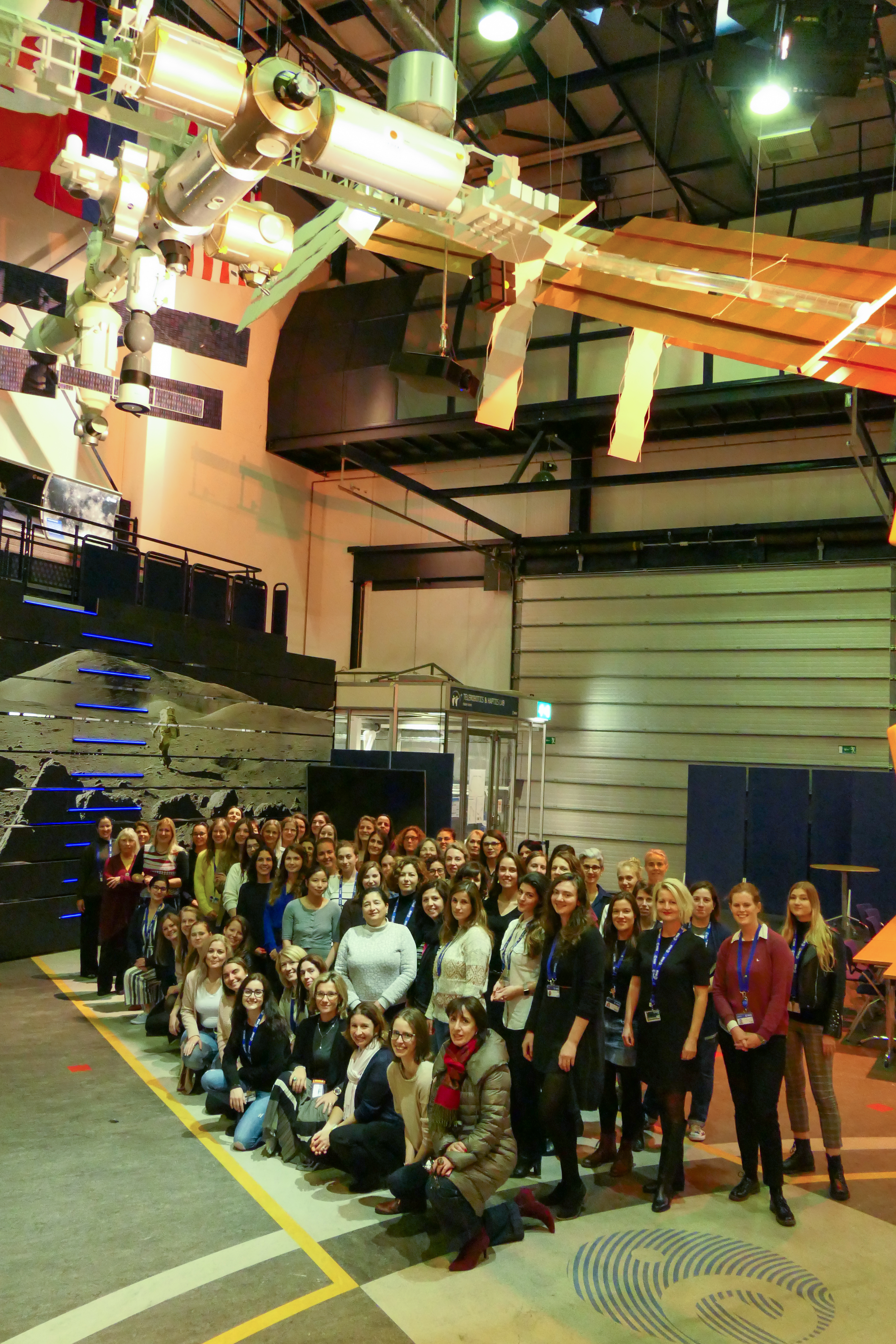
Happy and proud to be a part of the ESA team at the European Space Technology and Research Centre (ESTEC) and support the first all-women spacewalk on Friday 18 October 2019. The picture shows more than fifty women working at ESA’s technical heart ESTEC in the Netherlands, many working in daily Space Station support roles who gathered to show their support and highlight the role of women in space. Full story available from ESA website.

esa estec human robotic space exploration klara anna capova
Women of ESA salute the women making history on first all-female spacewalk.

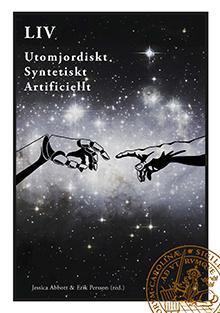
‘Life. Extraterrestrial, Artificial and Synthetic’ book available online in Swedish

LIFE Extraterrestrial, Artificial and SyntheticThis book is the result of an interdisciplinary project at the Pufendorf Institute, Lund University. Twelve researchers from the same number of disciplines have been included in the project. The purpose has been to highlight the challenges that come with extraterrestrial, artificial and synthetic life. The interdisciplinary approach has given us the opportunity to highlight the questions from every conceivable angle, but also to find completely new combinations of methods and approaches.

Our hope is that the book will inspire new thoughts and discussions about life. The book addresses both those who are already interested and those who have not yet begun to ponder the challenges of extraterrestrial, artificial and synthetic life.

Life is a central concept in many areas of research, for example in biology, astrobiology, chemistry and medicine, as well as in law, theology and philosophy. Life is also a central theme of art. It is treated and pondered in numerous works of art, in poetry, novel and film. How we understand, value and protect life is extremely fundamental. In the future, these issues will become even more difficult and, if possible, even more important. Research groups from all over the world today work to create life in the laboratory, look for life in space and provide machines with properties that have previously only been living creatures, and development is fast. It is important that we at the same time consider the challenges that this entails. It will take time to find ways to live in a world where life exists in forms we can hardly imagine today and where the boundary between living beings and machines becomes increasingly blurred. The decisions we make today will also affect the development of society, research and development for a long time to come.

The pre-print of the White Paper available online

astrobiology and society white paper capova persson duner milligan

I am happy to announce that the free preprint version of the “Astrobiology and Society in Europe Today” white paper is now available for download from the European Astrobiology Institute website, section documents. The White paper, edited by K.A. Capova, E. Persson, T. Milligan, D. Dunér, was recently published through the SpringerBriefs in Astronomy book series, Springer, Cham (2018). The final authenticated version is available online from Springer’s Briefs in Astronomy series: http://dx.doi.org/10.1007/978-3-319-96265-8

The European Astrobiology Institute (EAI) aspires to become a primary forum for the development of European Astrobiology ensuring that this relatively new interdisciplinary research field is established across Europe. The European Astrobiology Institute will be a consortium of European research and higher education institutions and organisations as well as other stakeholders aiming to carry out research, training, outreach and dissemination activities in astrobiology in a comprehensive and coordinated manner and thereby securing a leading role for the European Research Area in the field.