Space for Earth: Health, food, and climate

ESA astronaut Thomas Pesquet shows how space technologies and research onboard the International Space Station are used for the benefit of people on Earth. Thomas explains how space research is relevant to three of the United Nation’s goals: Health (SDG3), Zero hunger and food security (SDG2), and Climate action (SDG13).

The Sustainable Development Goals are the world’s to-do list for people and the planet by 2030. Learn more about the European space laboratory, the Columbus module, and four examples of how space exploration supports sustainable development in Europe and in Africa. This video is Part 2 of a 2-part series that describes how space exploration supports the sustainable development on Earth today.


Read more about benefits of European space exploration: http://youbenefit.spaceflight.esa.int
Space for Earth: Water and sanitation

Join ESA astronaut Thomas Pesquet as he explains the benefits of space exploration technologies and activities for Earth. This video is focused on the life support technologies originally developed for astronauts and shows how space research on water recycling for deep-space exploration is contributing to sustainable development in Europe and in Africa.

In this video Thomas explains how space research is relevant to the sixth United Nation’s goal ‘Clean Water and Sanitation’. The Sustainable Development Goals are the world’s to-do list for people and the planet by 2030. This video is Part 1 of a 2-part series that describes how space exploration supports the sustainable development on Earth today.

Read more about benefits of European space exploration http://youbenefit.spaceflight.esa.int

Swiss Space Centre’s IGLUNA Expert Team

The first ESA_Lab Demonstrator Project IGLUNA offered students opportunities to participate in an international, collaborative project on a visionary space topic: A Habitat in Ice.

IGLUNA is aimed at supporting and accelerating the ESA_Lab@ initiative. The Swiss Space Center coordinates IGLUNA project and leads the main systems engineering activities, coaches the students teams, organises the events, and communicates to the general public. IGLUNA is emulating European students and foster exchange through an international, interdisciplinary, and collaborative platform for demonstration of space technologies. During the project, university students apply their knowledge to solve a technical challenge, to sustain life in an extreme environment, increasing in parallel the maturity of technologies relevant to the space domain.

In one year, 20 student teams from various disciplines gathered their knowledge to design a habitat potentially suitable for an extreme environment, such as the Moon. More than 150 students from 9 European countries designed their prototypes during the autumn semester 2018 and built their modules in the spring semester 2019.

The IGLUNA is an exciting opportunity for students interested in space exploration. In this truly international, interdisciplinary, and collaborative project, the students can present and test their solutions to some of the real challenges of the space missions.

It has been a privilege to be one of the IGLUNA Experts for the 2019/2020 campaign and I am looking forward to working with the 2020/2021 campaign teams.

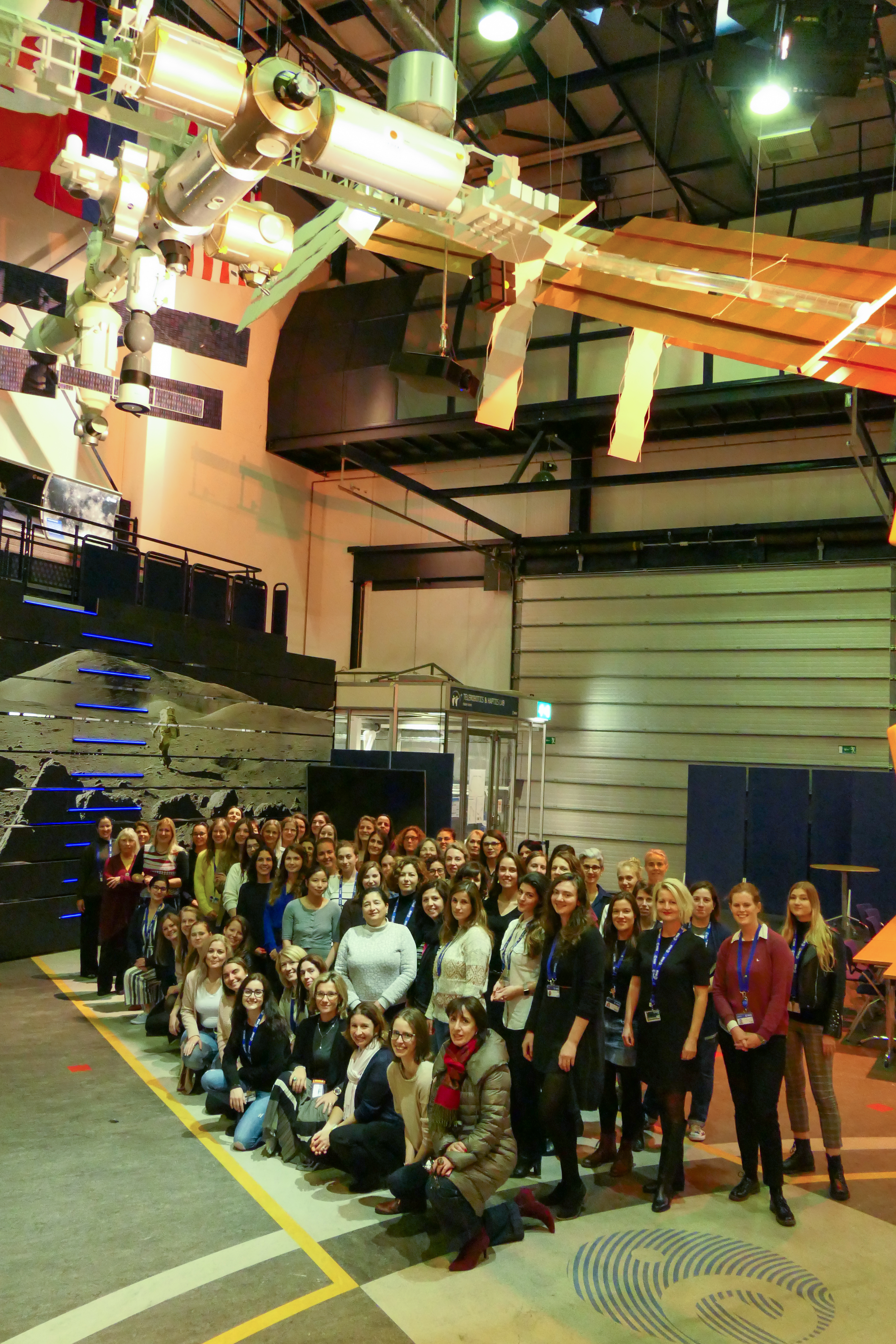
Women of ESA salute the women making history on first all-female spacewalk

Happy and proud to be a part of the ESA team at the European Space Technology and Research Centre (ESTEC) and support the first all-women spacewalk on Friday 18 October 2019. The picture shows more than fifty women working at ESA’s technical heart ESTEC in the Netherlands, many working in daily Space Station support roles who gathered to show their support and highlight the role of women in space. Full story available from ESA website.

esa estec human robotic space exploration klara anna capova
Women of ESA salute the women making history on first all-female spacewalk.