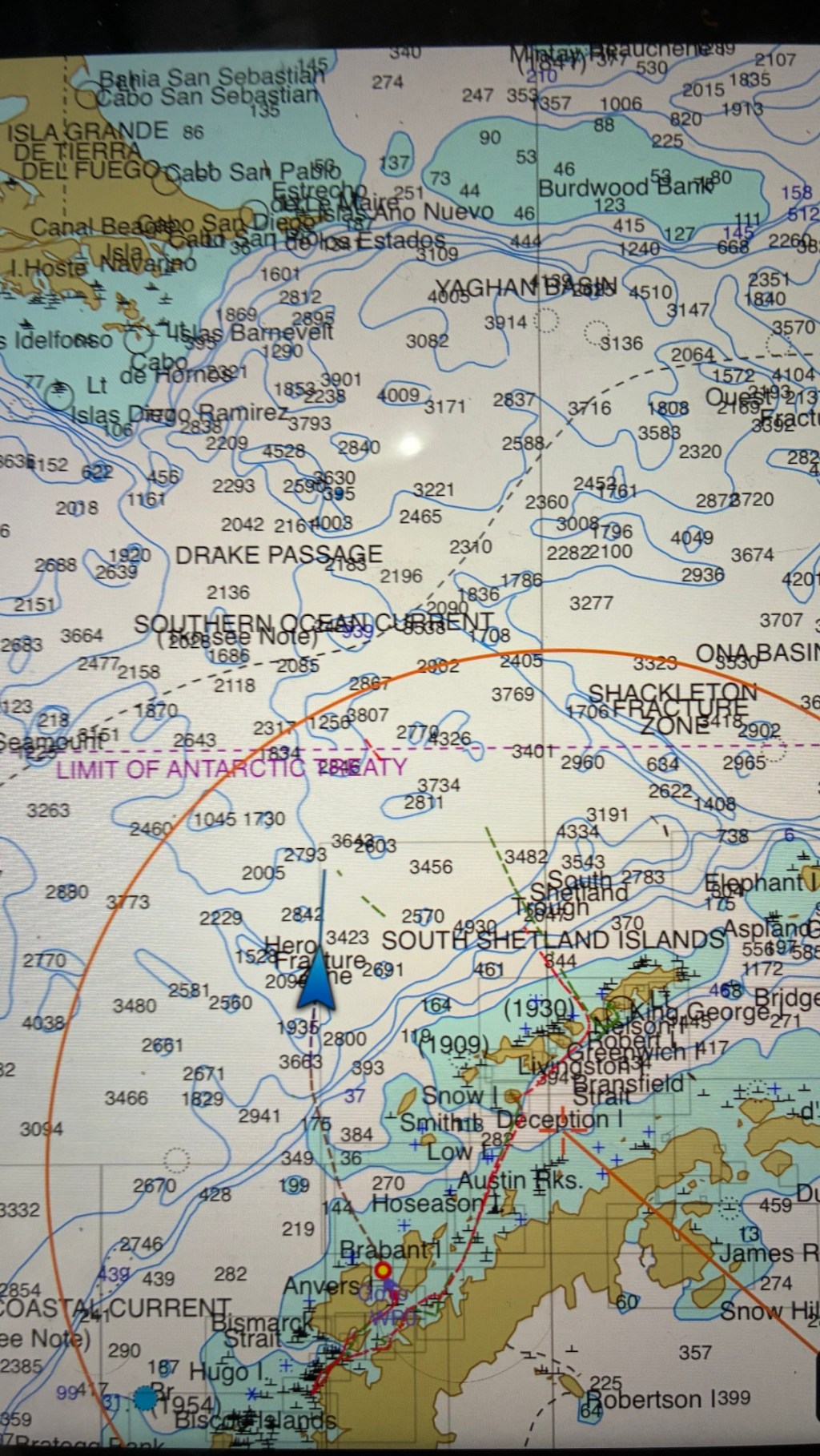
There is a moment, just as you clear the last jagged peaks of Cape Horn and leave the shelter of the beagle channel behind, when the ocean opens up into something boundless. The sea changes its rhythm. The air tastes sharper, charged with the ancient, unyielding presence of a continent that belongs to no single nation, but to the Earth itself.
People often ask me why I keep going back. Why trade the comforts of home for the rolling swells of the Drake Passage, the freezing spray, and the unpredictable moods of the polar weather?
The answer isn’t simple, but it usually begins with curiosity.
The Anthropology of Wonder
As an anthropologist, my life’s work has been about listening—understanding how humans make sense of their world, how we tell stories, and how we connect with places that feel entirely foreign. But out on a sailboat, surrounded by miles of open ocean and towering icebergs, anthropology takes on a different texture.
You realize how small we are. And more importantly, you realize how desperately we need spaces that remind us of our smallness.
In our everyday lives, we are conditioned to master our environment. We climate-control our rooms, schedule our days down to the minute, and curate our views. But in Antarctica or Greenland, mastery is an illusion. You don’t conquer the polar regions; you adapt to them. You watch the wind shift, you respect the distance from the nearest port, and you surrender to the pace of the elements.
In that surrender, something extraordinary happens: your mind clears. The static of modern life falls away, replaced by a profound, grounding presence.
Bringing the Wild Back Home
You don’t necessarily have to sail across an ocean to find that state of mind, though it certainly helps. You just have to cultivate the willingness to look closely.
It’s what I see whenever I sit down with children to draw and talk about the animals of the far south. A child doesn’t need an expedition ship or a GPS coordinate to explore. They have an innate compass of curiosity that points straight toward wonder. Whether they are imagining a chinstrap penguin’s journey across the ice or deciding that an orca’s patch should be painted in wild, improbable colors, they are practicing the most vital human art of all: paying attention to a world worth saving.
As my thoughts turn toward the next voyage—pointing the bow northward toward the majestic fjords and glaciers of Greenland—I am reminded that every adventure is just a chapter in a much larger story.
Wherever your own compass is pointing today, I hope you find a moment to step outside, look at the horizon, and let yourself wonder what lies just beyond it.
Fair winds and wide horizons,
Klara


Leave a Reply