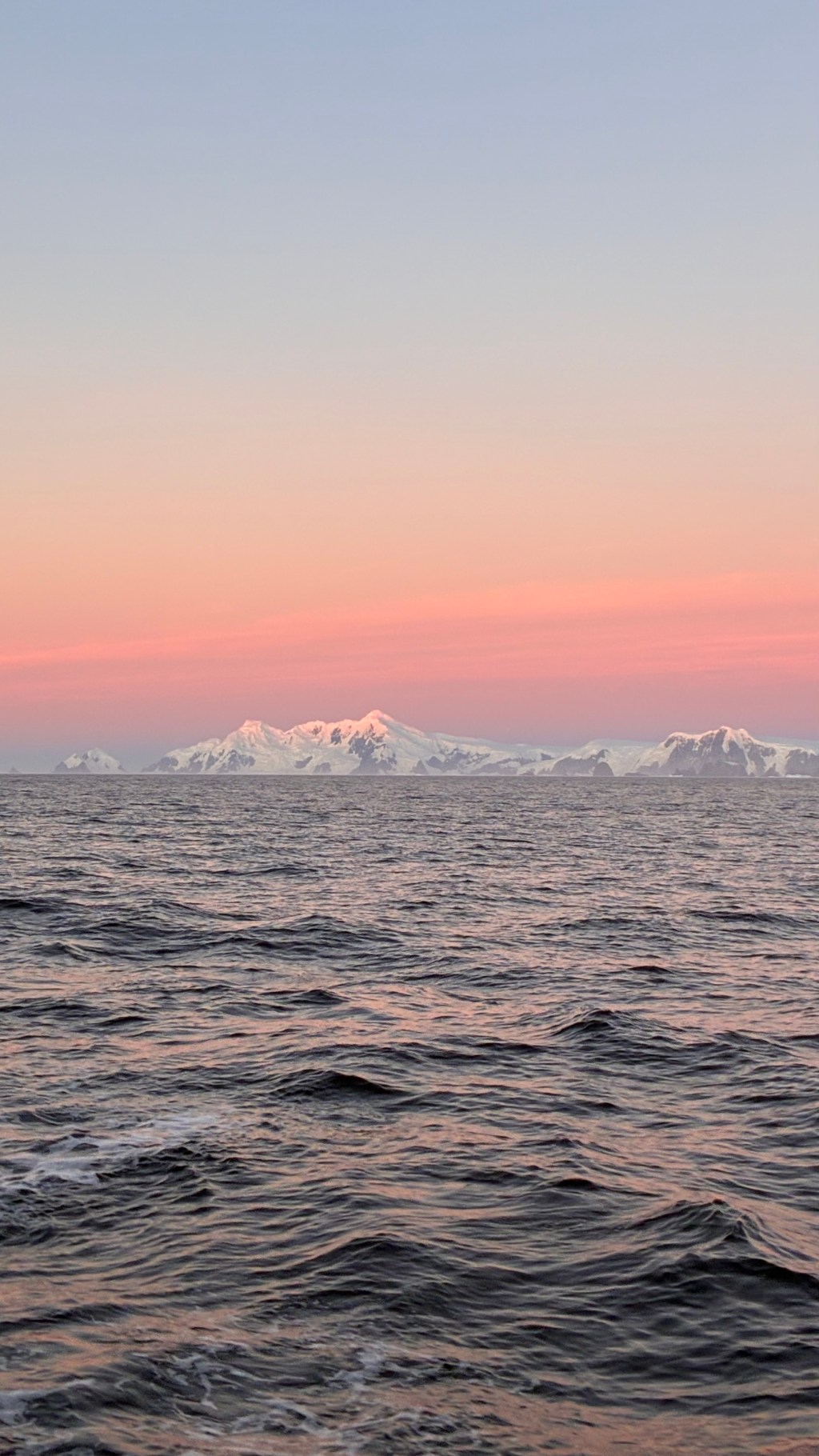
People often imagine Antarctica as endless white. In reality it is a place of subtle contrast and surprising colour, and it taught me more about seeing than any class could. My point here is that Antarctic light works by subtraction. It removes everything unnecessary from a scene, and that is exactly what a good photograph or a good piece of writing needs to do.
Under heavy cloud, which is common, the landscape flattens into a few tones: charcoal rock, grey water, white snow. Colour almost disappears. Photographers sometimes complain about this, but I think overcast days are a gift. Without strong shadows and bright highlights, you see shapes clearly. The line where a glacier meets the sea. The outline of a ridge. The silhouette of a sailing yacht at anchor beneath enormous peaks.
When the sun does break through, the change is dramatic. Low-angle light makes old, compressed ice glow an intense blue from inside. Late in the day, the mountains can turn rose and violet for a few minutes before the colour fades. These are the moments everyone photographs, and they are beautiful. But they can also distract. It is easy to come home with a hundred sunset pictures and very few that say anything about the place.
Looking for geometry rather than spectacle changed what I noticed. The black-and-white pattern of a chinstrap penguin’s face. The fracture lines on a glacier front. The repeated shapes of icebergs drifting in a bay. These are simple, strong forms. They do not need colour to be interesting, and they are what remains in memory long after the details fade.
Months later, going through my expedition photographs at home, I realised how clearly these scenes still spoke. The landscape had already done much of the editing. Keep the essential shapes, leave out the clutter, and a single image can tell a child what Antarctica is really like. This was the starting point for my colouring book: real places and real moments, chosen from my own photographs.
The broader lesson applies to any kind of storytelling. Adding more is easy. Deciding what to leave out is the real work. Antarctica does that for you, if you let it. The rest of us have to practise.


Leave a Reply