The Drake Passage has a fearsome reputation. It is the stretch of open water between Cape Horn and the South Shetland Islands, around eight hundred kilometres wide, where the Southern Ocean funnels between South America and Antarctica with nothing to slow it down. Travel writers love it. “The most dangerous sea in the world.” “The Drake Shake.” I have crossed it twice, and my argument is this: the Drake is serious, but the danger is mostly managed long before you leave Ushuaia. What decides the crossing is preparation and timing, not bravery.
Preparation starts with the boat. Before clearing the Beagle Channel, everything below decks has to be stowed as if the boat might roll over. Heavy tins low and wedged. Books and loose items locked away. Spare fuel and water lashed down. Foul-weather gear ready where you can reach it in the dark. If something can fly across the saloon, at some point it will. A boat that is well stowed is quieter, safer and much easier to live in when the motion builds.
Then there is the weather window. Low-pressure systems march through the Southern Ocean one after another. A good skipper does not try to fight them. You wait in port, study the forecasts, and leave when there is a gap long enough to get across. Waiting is the hardest part, because everyone on board wants to go. But choosing the right day does more for safety than any piece of equipment.
Preparation is also personal. Once the swell lengthens, simple tasks become slow, careful work. Pulling on boots, making tea, plotting a position: all of it needs planning. Seasickness humbles almost everyone at some point, including experienced sailors. The crews that cope best are not the toughest. They are the ones who eat before they are hungry, rest before they are exhausted, and say early when they are not coping.
My two crossings were very different. The first time, I sailed as crew on a seventy-foot steel cutter. The second time, I was mate on a twelve-metre steel schooner. As crew, the Drake is about doing your watches well and looking after yourself. As mate, the questions change. Are people sleeping enough? Is anyone getting cold or quiet? What will we do if the forecast is wrong? The water is the same. The weight you carry is not.
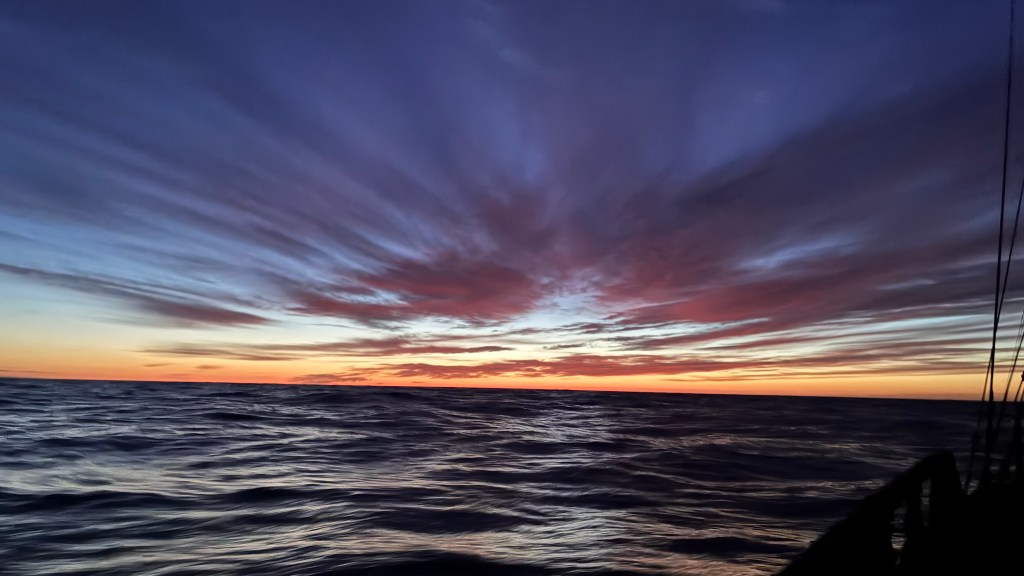
And the Drake is not always wild. It is a place of sharp contrasts: a day of grey, rolling seas under low cloud, followed by a strange glassy calm under a pale sun. When the first tabular icebergs appear on the horizon, flat-topped and enormous against the dark water, the tiredness of the watches falls away for a moment. That is the reward for preparing well: you arrive with enough energy left to notice where you are.


Leave a Reply