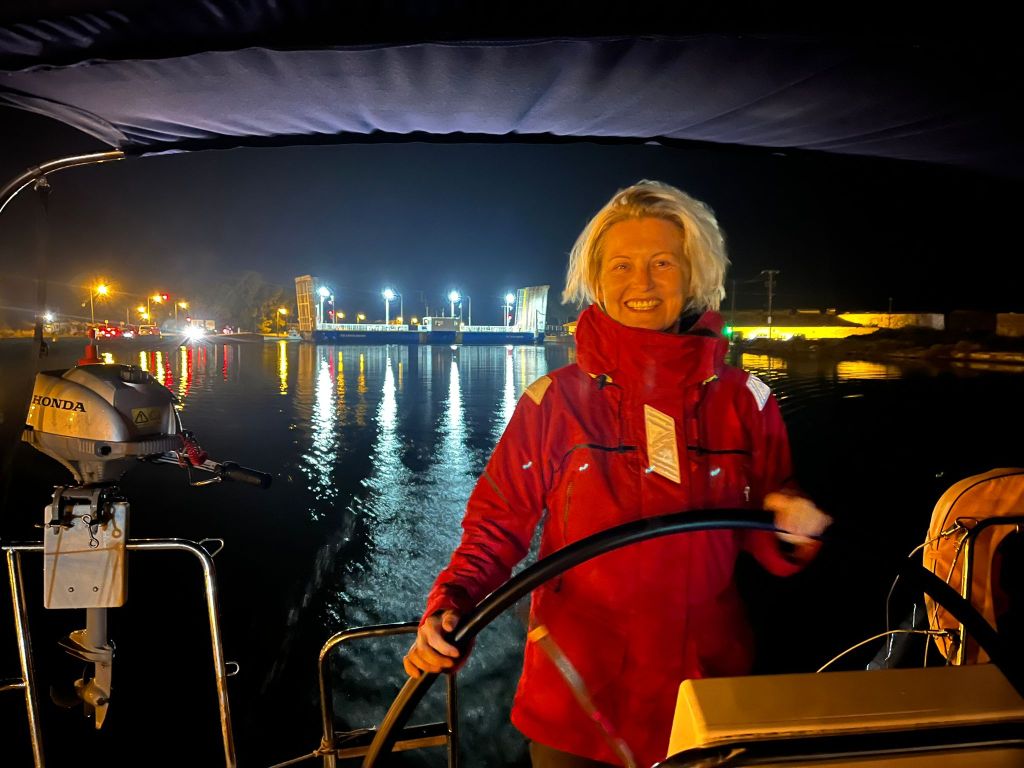
Anthropologists like to say that participant observation is the heart of the discipline: you learn about people by living alongside them. In practice, much of academic life is spent far from anyone you are studying. You write grant applications, answer emails and read other people’s fieldnotes. Going to sea reminded me why the method matters. Some knowledge cannot be collected by asking questions. It can only be learned by doing the work.
Sailing is full of this kind of knowledge. Ask an experienced sailor how they know when to reef, and the answer is often vague: “you feel it”, “the boat tells you”. That is not evasion. It is an honest description of skill that lives in the body: how the helm loads up, how the boat heels, how the sound of the wind changes. You cannot write it down in a way that transfers it. You can only stand next to someone who has it, watch, and slowly acquire it yourself.
The same goes for how sailors read each other. Spend enough time in harbours and anchorages across the North Atlantic, and you notice that competence is communicated almost without words. A neatly coiled line on a pontoon. Fenders ready before entering a lock, not after. A stern-to berth in a crosswind done without shouting. Experienced crews spot these things in seconds, and they form judgements accordingly. Nobody announces their competence. They do not need to.
For research, the lesson is uncomfortable. If you only interview people, you collect what they can put into words, which is often the least important part of what they know. A survey of sailors would tell you about their certificates and their miles. It would miss the instinct that makes them reef twenty minutes before everyone else. To understand expertise, you have to accept being the least competent person in the room for a while, and let that be part of the data.
Being a beginner again was humbling and useful. It made me a more careful observer. It also changed how I write. Good maritime writing, like a good passage plan, needs precision without decoration. If something is unclear, someone gets hurt or the boat ends up in the wrong place. That is excellent discipline for anyone who has spent years writing for academic journals.
The final lesson came from the sea itself, and it applies to research too. Fieldwork taught me to listen to local knowledge. Sailing taught me that if you misread the tide table, the current will correct you, without the slightest regard for your feelings or your publication record.


Leave a Reply